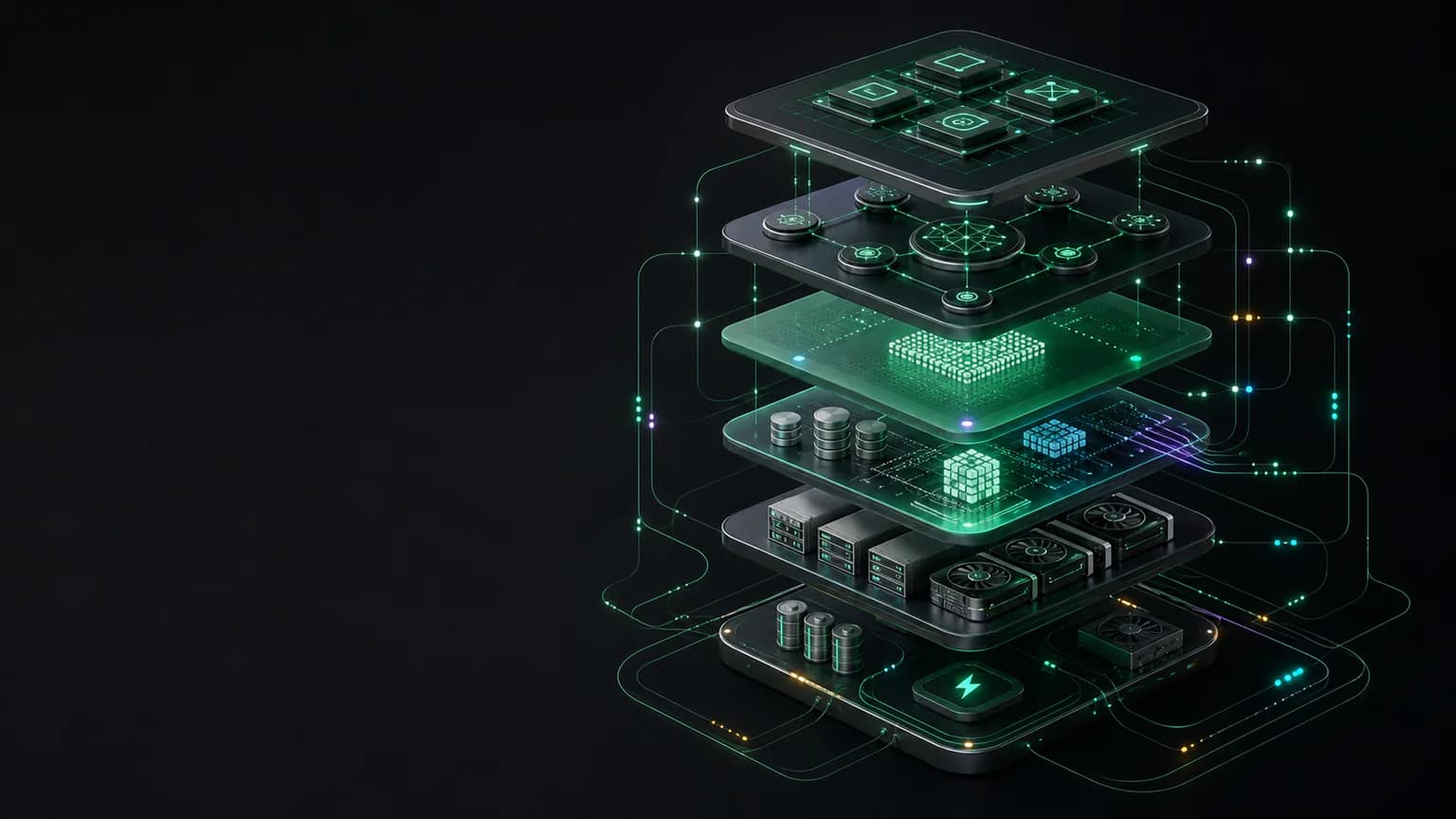
Anthropic's Claude 3.5 Sonnet computer use capabilities represent a breakthrough in multimodal agentic software engineering, allowing AI models to perceive desktop GUI displays, reason about visual layout elements, and dispatch physical mouse and keyboard inputs inside isolated execution environments.
This system breakdown provides an evidence-graded architectural examination across 20 interactive SVG diagrams organized into 5 core engineering chapters:
1. Screen Vision Tokenization & Coordinate Scaling
Standard vision models process static images without spatial precision. Computer use requires exact 1:1 pixel coordinate alignment so that model-predicted actions hit precise UI buttons and input fields. Display screenshots are sub-sampled to 1568px max dimensions, split into 14x14 visual patches, and mapped back to native screen resolution through an inverse coordinate transform matrix.
2. Vision-Guided UI Action Execution Loop
The computer use loop operates as an iterative observe-decide-act cycle. Claude outputs structured computer_20241022 tool calls specifying action primitives (left_click, mouse_move, type, key, screenshot). Client-side runners validate action parameters against display bounds before dispatching synthetic input events to the X11/Wayland display server via xdotool or PyAutoGUI.
3. Zero-Trust Agentic Sandbox & Isolation Boundaries
Running model-driven code and GUI interactions on developer machines introduces severe security risks. The computer use architecture enforces zero-trust container isolation using unprivileged Docker containers (--cap-drop=ALL), non-root execution (uid=1000), MITM egress proxy domain allowlisting, and ephemeral OverlayFS copy-on-write storage that purges session files on exit.
4. PII Redaction & Multimodal Guardrails
To prevent sensitive credentials and personal information from leaving local boundaries, on-device OCR scanners inspect screenshot buffers for credit card numbers, passwords, and API keys, applying pixel-level blackout masks over sensitive bounding boxes before API transmission. Indirect prompt injection filters analyze web content rendered on screen to prevent adversarial hijacking.
5. Multi-Agent Subagent Coordination & IPC Protocols
Complex automation workflows delegate subtasks across specialized subagents (browser agent, terminal runner, code reviewer). Subagents communicate over an isolated Unix domain socket IPC bus using typed JSON-RPC messages, while a distributed workspace lock manager prevents race conditions when accessing shared code repositories.
Continue Reading
All Blog PostsAttention Is All You Need Paper Breakdown: The Original Transformer Architecture
Technical paper teardown of Attention Is All You Need (Vaswani et al., NIPS 2017) detailing Scaled Dot-Product Attention math, Multi-Head Attention projections, Sinusoidal Positional Encoding, and KV cache memory bounds.
Autonomous Contract Redlining & Auditing in Enterprise M&A
How tier-1 corporate M&A teams deploy agentic LLM pipelines to analyze 10,000+ confidential deal documents under zero-data-retention VPC constraints and deterministic audit logging.
Autonomous Inventory Reconnaissance with Vision-Language Models
How enterprises are deploying VLMs on edge devices to automate warehouse cycle counting, demonstrating clear ROI and dealing with physical constraints.