Evidence boundary
This system breakdown analyzes the Deep Agents core harness (libs/deepagents) and Deep Agents Code terminal agent (libs/code) at commit 9f3a1dd38f8b5dbd828d2f366e9b03dad359fadf (release v0.7.6).
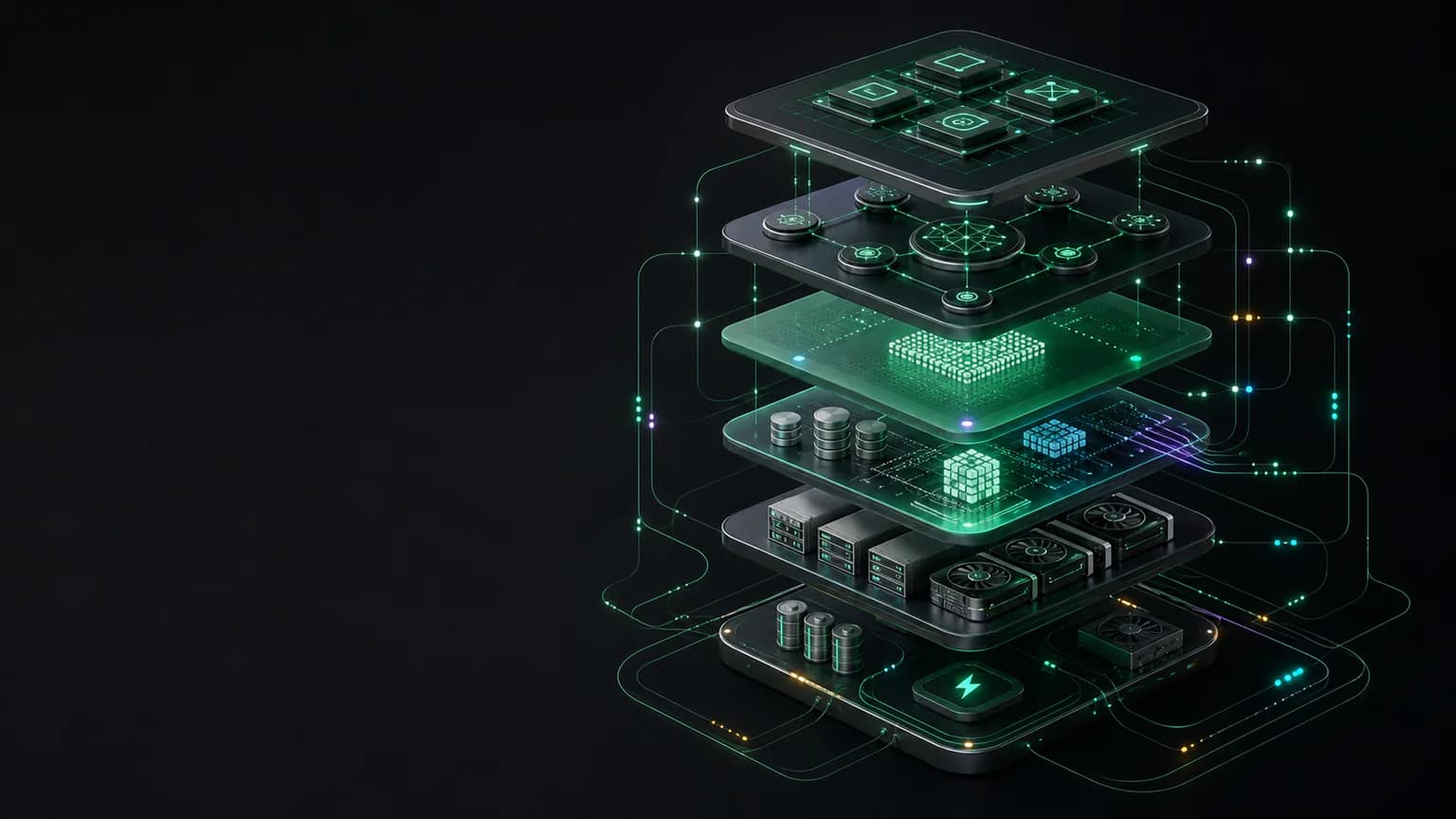
1. The 3-Tier Layered Architecture
Deep Agents does not introduce a competing agent runtime; it acts as an opinionated harness assembled directly on top of LangChain and LangGraph:
2. O(N^2) → O(N) Checkpoint Reduction: DeltaChannel
In standard conversation graphs, message lists grow cumulatively on every step. When checkpointing an agent run with $N$ supersteps, saving full message histories at step $1, 2, \dots, N$ consumes:
For long-horizon coding tasks spanning hundreds of turns, this leads to severe storage bloat and checkpoint serialization latency.
Deep Agents eliminates this overhead in DeepAgentState by binding the messages key to DeltaChannel:
DeltaChannel Mechanics:
- Incremental Deltas: Intermediate checkpoints serialize only newly appended messages in the current superstep (
O(1)delta payload per step). - Periodic Snapshots: Every 50 supersteps (
snapshot_frequency=50), the channel writes a full consolidated snapshot to keep thread reconstruction fast on recovery. - Cumulative Storage: Total storage across $N$ steps drops from quadratic to strictly linear
O(N).
3. The 10-Stage Deterministic Middleware Engine
The create_deep_agent() factory constructs an ordered 10-stage middleware pipeline wrapping the LLM request, tool invocations, and state persistence:
SkillsMiddleware: Scans and parsesSKILL.mdfrontmatter. Exposes a lightweight skill index in the prompt and loads detailed skill bodies on demand.FilesystemMiddleware: Interceptsls,read_file,write_file,edit_file, andexecute. Implements automated large payload offloading.SubAgentMiddleware: Manages thetasktool. Dynamically compiles worker subagents while scrubbing private parent middleware state keys.AsyncSubAgentMiddleware: Dispatches non-blocking subagent tasks to remote LangGraph Platform / LangSmith endpoints.create_summarization_middleware: Compresses conversation history when total token counts exceed threshold limits.PatchToolCallsMiddleware: Sanitizes provider-specific formatting anomalies in tool call payloads before execution.PromptCachingMiddleware: Inserts Anthropiccache_controlbreakpoints ahead of dynamic user turns to maximize cache read rates.MemoryMiddleware: Synchronizes persistent cross-session entity memory with long-term storage backends.HumanInTheLoopMiddleware: Enforces granular tool-level permission gates (interrupt_on={"edit_file": True})._ToolExclusionMiddleware: Filters out tools unsupported by the active model profile.
4. Virtual Filesystem Routing: CompositeBackend
Deep Agents decouples tool operations from host OS disks using the BackendProtocol interface:
Host Path Translation for Shell Commands:
When the model invokes the execute shell tool, virtual paths like /scratch/output.log do not physically exist on the host filesystem. FilesystemMiddleware injects dynamic prefix mappings via _route_host_path_prompt, allowing the LLM to output valid OS-level paths directly without requiring runtime path interception.
5. Subagent State Isolation & Scope Hygiene
When an agent spawns a subagent via the task tool, sharing the full parent state dictionary creates prompt pollution and unexpected variable overwrites.
Deep Agents enforces state isolation by dynamically computing private state field names (private_state_field_names):
- Middleware-owned state fields (e.g. internal summarization indices, scratchpads) are scrubbed before compiling the subagent's
CompiledStateGraph. - Subagents execute in isolated thread scopes and return clean summarized findings to the parent graph.
6. Deep Agents Code (dcode) CLI Architecture
libs/code packages the complete terminal developer assistant:
- Client-Server Separation: The Textual TUI (
app.py) communicates with an in-memory or remote LangGraph dev server (server_graph.py). - Cross-Process Concurrency Protection: MCP OAuth token refreshes use
filelockto prevent race conditions across multiple terminal sessions. - Agent Client Protocol (ACP): Bridges
dcodeto modern code editors (e.g. Zed) as an embedded assistant.
Continue Reading
All Blog PostsInside Agent Protocol: OpenAPI Control Plane, RFC 8610 CDDL Streaming & Thread Checkpoint Architecture
A production teardown of LangChain Agent Protocol (v0.1.6)—deconstructing the 5-router OpenAPI control plane, thread checkpoint branching, 9-channel RFC 8610 CDDL streaming, subgraph causation edges, and AST topological code generation.
Inside Autonomous Agentic Code Editor: AST Indexing, Diff Generation, and Sandbox Verification
A commit-pinned examination of autonomous agentic code refactoring architectures detailing tree-sitter AST symbol indexing, unified diff generation, and isolated sandbox execution loops.
Inside Apache Kafka Partition Storage & Zero-Copy Engine
An evidence-audited, 20-diagram interactive system breakdown tracing sequential commit log append (.log, .index, .timeindex), Linux sendfile() zero-copy page cache transfers, Producer RecordAccumulator memory pools, Consumer Group Cooperative Rebalancing, and KRaft quorum leader fencing.