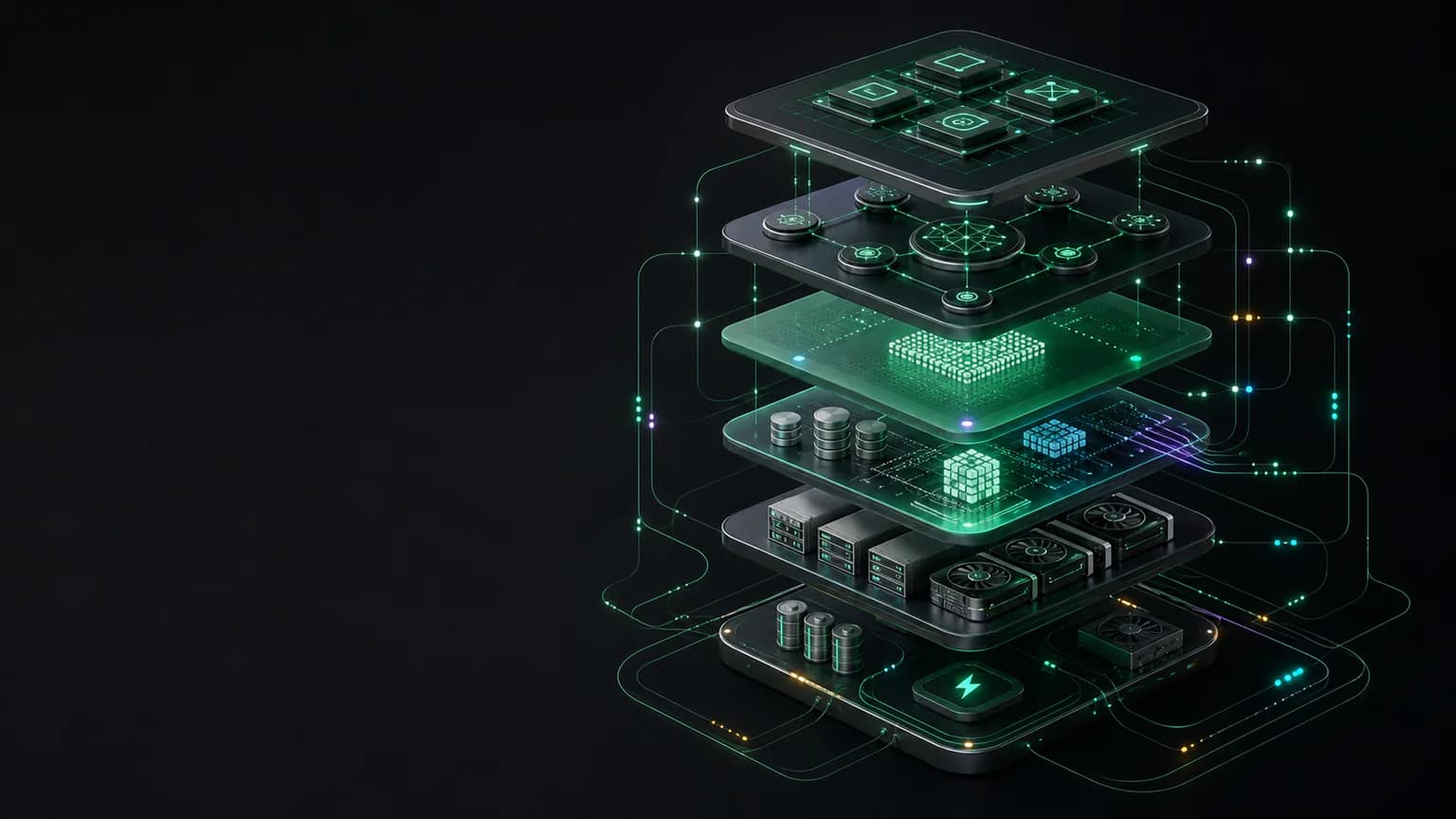
Chatwoot is an open-source, multi-channel customer engagement platform engineered to handle millions of real-time messages across WhatsApp, Telegram, email, and web chat widgets. Operating at high enterprise concurrency requires a decoupled architecture that balances fast HTTP webhook ingestion, durable relational persistence, sub-10ms WebSocket broadcasting, virtualized DOM timeline performance, and integrated AI agent copilot execution.
This 20-chapter interactive system breakdown deconstructs Chatwoot's complete architecture across 7 core pillars: Ingress & Edge Security, Asynchronous Queue Pipeline, Relational Persistence, Real-Time WebSockets, AI Copilot Engine, Vue.js Frontend State, and Full-Stack Observability.
Pillar I: Ingress & Edge Gateway Architecture
Section 1: Multi-Channel Webhook Ingress Gateway
Customer messages enter Chatwoot via HTTP POST webhooks dispatched by external channel APIs (e.g. Meta WhatsApp Business API, Telegram Bot API). Because external webhook senders enforce strict 5-second HTTP timeout windows, Chatwoot isolates ingress from heavy database transactions.
Section 2: HMAC SHA256 Security & Replay Attack Defense
Before processing payloads, the WebhookVerifier concern computes an HMAC SHA256 digest using the inbox secret token and performs a constant-time security comparison (ActiveSupport::SecurityUtils.secure_compare) to prevent timing side-channel attacks.
Chatwoot Webhook Ingress Sequence
Why does Chatwoot perform HMAC SHA256 verification before enqueuing jobs to Sidekiq?
Section 3: Multi-Tenant Subdomain & Account Context Router
Tenant isolation is enforced via Current.account thread-local storage (ActiveSupport::CurrentAttributes), ensuring every ActiveRecord model query automatically appends WHERE account_id = ? scopes.
Pillar II: Asynchronous Job Pipeline & Event Queue Architecture
Section 4: Sidekiq Multi-Queue Processing Architecture
Once enqueued, WhatsappEventsJob payloads are pushed into Redis list structures. Sidekiq worker processes continuously poll Redis queues using the non-blocking BRPOP command with explicit queue weighting (webhooks: 5, events: 3, mailers: 1).
Section 5: Redis Data Structures & Connection Pool Topology
To handle high concurrent thread access, Chatwoot wraps Redis connections in a ConnectionPool manager with a size of 25 reusable sockets per process.
Section 6: Event Dispatcher & Internal Event Bus Subsystem
ActiveRecord callbacks trigger an internal event dispatcher (EventDispatcher.dispatch), decoupling core message saving from secondary tasks such as push notifications and webhook integrations.
Pillar III: Relational Persistence & Database Engineering
Section 7: PostgreSQL Schema & Relational ERD Topology
Chatwoot's primary relational schema links accounts (1:N) -> inboxes (1:N) -> conversations (1:N) -> messages under strict foreign key constraints.
PostgreSQL Message Record Commit State Delta
Section 8: Multi-Tenant Database Isolation & Partitioning
To maintain high performance at scale, high-volume message tables utilize PostgreSQL declarative range partitioning by created_at timestamp.
Section 9: Database Indexing, Counter Caches & Performance Tuning
Composite B-tree indexes (account_id, conversation_id, id DESC) combined with GIN indexes on content_attributes JSONB columns deliver sub-millisecond query latencies.
Pillar IV: Real-Time Communication & WebSocket Architecture
Section 10: ActionCable Server Hub & Connection Lifecycle
WebSocket clients establish persistent TCP sockets with ActionCable, authenticating via pubsub_token parameters.
ActionCable Real-Time WebSocket Frame Payload
WebSocket Text Frame (Opcode 0x1){}Section 11: Redis Pub/Sub Backplane & Cross-Node Scaling
ActionCable broadcasts JSON message events across a Redis Pub/Sub backplane, distributing real-time updates across multiple Rails server nodes.
Section 12: Client Stream Buffering & Backpressure Management
Client JavaScript buffers rapid incoming events, debouncing typing indicators to prevent UI frame drops.
Pillar V: AI Agent Copilot & LLM Service Engine
Section 13: AI ActionService Architecture & Capability Registry
Chatwoot embeds native AI Copilot capabilities directly into the support workspace. Support agents can request AI-generated reply suggestions, conversation summaries, or tone adjustments.
Section 14: Dynamic Prompt Window Construction & RAG Context Assembly
PromptsBuilder formats recent conversation history into structured user/assistant messages, injecting enterprise system instructions while adhering to token budgets.
Section 15: Server-Sent Events (SSE) & Streaming Token Pipeline
LLM response tokens stream directly to the browser composer UI over SSE connections, delivering real-time agent assistance.
Pillar VI: Agent Dashboard & Frontend State Architecture
Section 16: Vue.js Single Page Application (SPA) State Architecture
The Vue.js frontend organizes client state into modular Pinia/Vuex modules (conversations, contacts, agents, inboxes).
What problem does vLLM PagedAttention solve?
Section 17: Virtualized Timeline Rendering & DOM Performance
To maintain 60 FPS scrolling when displaying 10,000+ message histories, Chatwoot utilizes a virtualized scroller that keeps DOM node count under 40 elements.
Section 18: Multi-Agent Workspace Collaboration & Presence Protocol
Real-time collision detection alerts agents when co-workers are viewing or typing a response to the same conversation.
Pillar VII: Operations, Observability & Security Engineering
Section 19: Full-Stack Observability & Telemetry Pipeline
Prometheus metrics export active WebSocket connection counts, Sidekiq queue latency, and DB query performance to Grafana monitoring dashboards.
Section 20: Disaster Recovery, Backup & Security Hardening
High availability is guaranteed through PostgreSQL WAL streaming replication, automated S3 encrypted snapshots, and automated GDPR data erasure workers (Contacts::DestroyService).
Master Architecture Summary Table
| Architectural Pillar | Core Technology | Primary Responsibility | SLA / Latency Metric | |---|---|---|---| | Ingress Gateway | ActionController + HMAC SHA256 | Multi-channel HTTP webhook parsing | < 5ms HTTP response | | Job Pipeline | Sidekiq + Redis BRPOP | Asynchronous worker processing | < 100ms queue execution | | Persistence | PostgreSQL + GIN Indexes | ACID message & transaction storage | < 2ms query latency | | WebSockets | ActionCable + Redis Pub/Sub | Real-time cross-node broadcasting | < 10ms WS fanout | | AI Copilot | ActionService + OpenAI SSE | Streaming LLM reply suggestions | < 50ms time-to-first-token | | Frontend State | Vue.js + Virtual Scroller | Reactive DOM timeline rendering | 60 FPS scrolling | | Observability | Prometheus + OpenTelemetry | End-to-end metrics & tracing | Real-time telemetry |
Continue Reading
All Blog PostsAttention Is All You Need Paper Breakdown: The Original Transformer Architecture
Technical paper teardown of Attention Is All You Need (Vaswani et al., NIPS 2017) detailing Scaled Dot-Product Attention math, Multi-Head Attention projections, Sinusoidal Positional Encoding, and KV cache memory bounds.
The Complete Map of an LLM System
A production LLM system is a chain of contracts, not a model wrapped in a chat box.
Introduction to AI Agent Harnesses
Learn how an agent harness runs the model–tool loop, controls permissions, preserves state, and verifies when a task is done.